

Cat Magic
This is the story of my cat Socks and his many miracles.

This newsletter is an AI-free, venture capital-free, handcrafted creative endeavor. If you like my writing, please consider supporting my work with a paid Cattywampus subscription. 🧡
I told Stacy the night we met that the only magic I believe in is the universe’s Cat Distribution System, but the pile of kittens outside our back door when we first moved in together still came as a shock. It shouldn’t have: I’d made friends with the kittens’ mom, a black and white tuxedo with eyes that looked almost alien, when I first started visiting Stacy in New York.
Feral cats were a new concept for me; I grew up in Georgia farm country, where you scooped up any stray cat that came your way and made them part of your herd. But New York City’s feral cats are their own thing, and I learned right away that I’d never get close enough to Bobbi Jean to touch her. I don’t know how I knew her name was Bobbi Jean, I just did, and she’d follow me anywhere in the neighborhood when I called for her, trotting beside me at a distance as I coaxed her away from busy intersections and into the little slab of fenced-in concrete we call a “yard” in Queens. I fed and watered her three times a day, and during my first northeastern winter, I learned how to build her an insulated, water-proof feral cat shelter that kept her toasty and dry until spring.


I hadn’t heard of the Trap, Neuter, Return initiative back then, so Bobbi Jean remained unspayed that first spring — and in summer, she deposited five kittens at our door. Three solid black ones; a tiger-striped one that looked just like the tomcat that’d been stalking her around town; and a grey and white tabby, with a white tuxedo shirt just like her, baseball socks in the back and footie socks up front, and the pinkest nose I had ever seen outside of a story book. They were about seven weeks old when she brought them to us, and just as feral as she was. When I opened the door and saw them, I knew I was going to need a lot more city cat training.
It was one of the hottest Julys New York had ever seen, so Bobbi moved the kittens somewhere cooler during the days, and brought them back to us in the mornings and evenings. Stacy and I fed them and watered them every time they arrived, and sat out on the stoop talking sweetly to them so they’d get used to the sound of our voice.
Meanwhile, I signed up for every class offered by the ASPCA and the Mayor’s Alliance for NYC’s Animals, trekking to libraries all over the borough on weekends to learn about socializing feral kittens, and to get certified in Trap, Neuter, Return. We couldn’t do anything for the kittens, really, until I had been fully trained because we needed the resources that came with the certification: free traps, free spaying/neutering, free vaccinations and various bacteria/fungal treatments, and free food. But we were in a real race against time because it was scorching out there, and there are too many ways for kittens to not make it on the streets. Plus, the longer feral kittens go without socialization, the less likely it is that they can be socialized. Especially city kittens. We were already past the recommended time the ASPCA gave for socialization.
We named the three black kittens Bobbi Jr, for the one who wouldn’t leave Bobbi Jean’s side; Dobby, for the one with enormous ears, who was both the most scared and most eager to please (JK Rowling hadn’t revealed her evil back then); and Beth March, for the teeny-tiny runt who seemed very sick and unlikely to make it much longer. We named the tiger one Frodo because she was always going there and back again like an adventure-hobbit to some mystery place. And we named the big goofy tabby Socks, because, well, like Bobbi Jean, that just seemed to be his name.
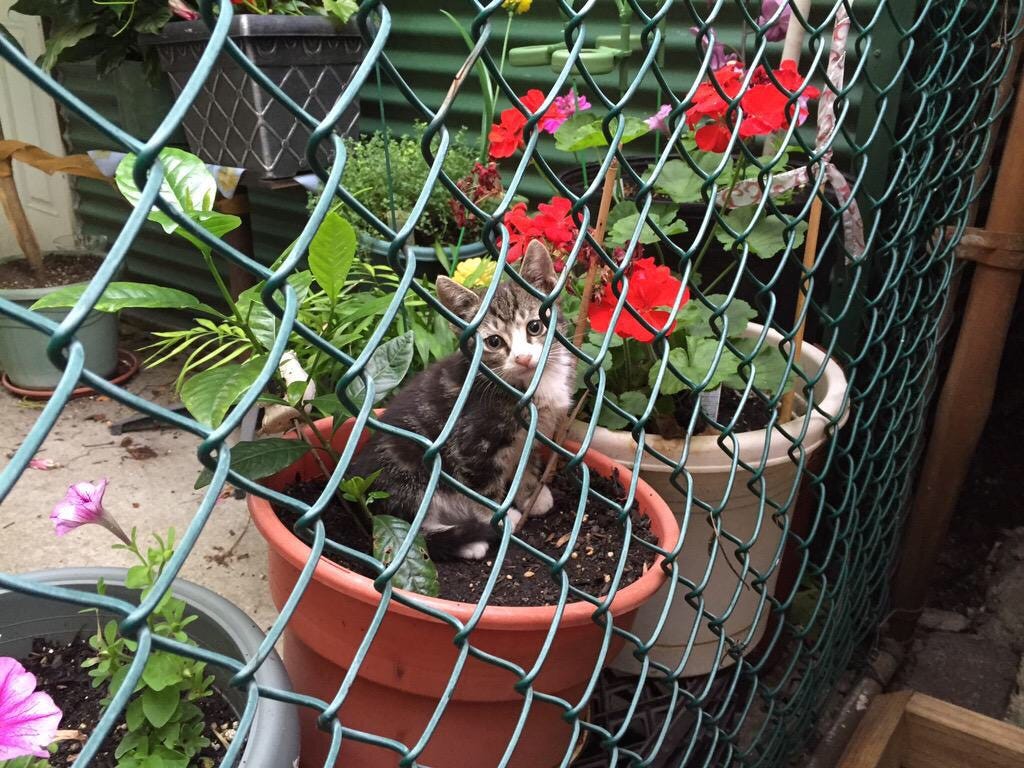
None of the other kittens really trusted us, but this lumbering doot-doot-doodle of a guy called Socks thought we were the bee’s knees. He didn’t let us pet him, but he’d play with us for hours, chasing every string we threw his way, flipping and flopping and rolly-polly silliness every time he showed up. On the day we trapped the kittens, whom we’d taken to collectively calling “the Bobbis,” we couldn’t get all of them into the trap at the same time. I’d learned in one of my classes that once a kitten sees you trap their siblings or their mom, they’ll never go near another trap, so you’ve gotta get every kitten at once. We had a string tied to a water bottle propping the door open, and we’d get two or three in at a time, but not all of them. We were getting desperate. The sun was setting and we’d lost Bobbi Jr. to a car only a week earlier.
Finally, all of the kittens besides Socks went into the trap. Stacy and I frantically decided that Socks was the only one who might come back, that we’d never see any of the others again if we missed them on our first attempt. And so, with my heart beating about ten billion miles a minute, absolutely sick to my stomach, I pulled the string and closed the door, trapping Dobby, Beth March, and Frodo — and sending Socks and Bobbi Jean skittering away into the alleyway behind our house.
I didn’t sleep all night. Stacy and I were beside ourselves, talking in circles about how maybe Socks would, one day, be hungry enough to come back. Maybe he’d be our second Bobbi Jean. We’d build him his own shelter to keep him safe in the winter. We’d get both him and Bobbi Jean spayed and neutered when he was big enough to trigger the trap on his own. We hadn’t lost him; we’d just had to save as many of them as we could. And anyway, maybe he’d come back soon. Maybe we’d be able to just grab him, scoop him up, something. Maybe. Oh please, maybe.
The next morning, at the Bobbis’ normal feeding time, I walked outside — and there he was. Socks. Just sitting there blinking at me, waiting for his breakfast. I tiptoed back inside, got the trap, brought it back outside and sat it down in front of him. And he walked right into it.
Socializing feral kittens is pretty much a full-time job. You can’t walk around them, you’ve gotta stay sitting on your butt the whole time and scoot from place to place. You can’t smile at them because they see your giant teeth inside your giant face as predatory. No sudden movements, no loud voices, NO TOUCHING. The touching has to be a trick. You can’t come at them from the front where they can see your hand, and you can’t just do it cold-turkey; you’ve gotta distract them with food. Those little tubes of Churu didn’t exist when the Bobbis came to us, so we bought a whole case of Gerber Number Two Chicken Baby Food, and that was the leverage we needed.
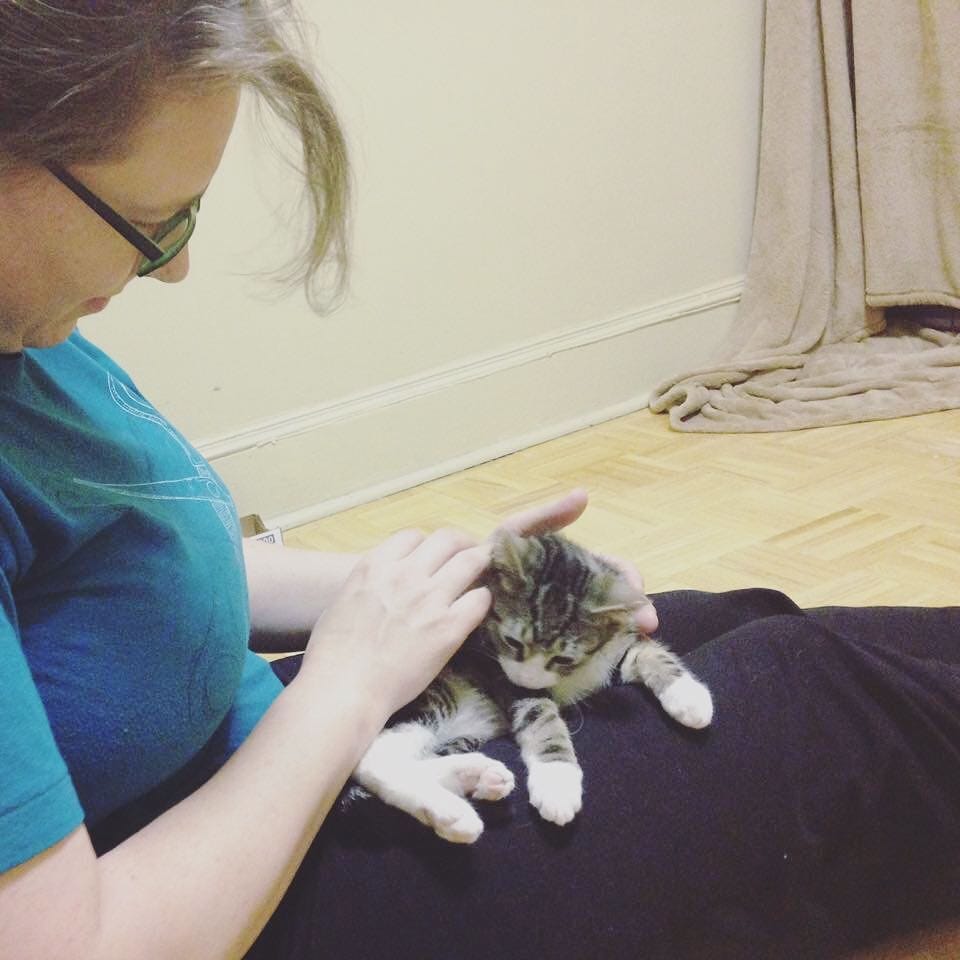
First, you gotta get the kittens obsessed with the taste of the food. Then you’ve gotta sit far away, look in a completely different direction so as not to scare them with eye contact, and hold out your chicken-covered finger for as long as it takes for one of them to try a lick. After a while, you can lure them into sitting near you while they lick the baby food. Then sitting on your legs. Then you can look at them while they’re eating. After a longer while, when they’re eating regular wet food from a bowl, you can try to sneaky-stroke their backs (again, as a surprise! they can’t see you coming!). Then, wet food and more prolonged pets. And on and on until they see that your hands are not a threat. And, finally, on the best and luckiest day, they let you pet them for real.
Unless you’re Socks Bobbi, in which case you go from one lick of Gerber Number Two Chicken Baby Food to crawling directly into a human lap, and flipping over for some belly rubs.


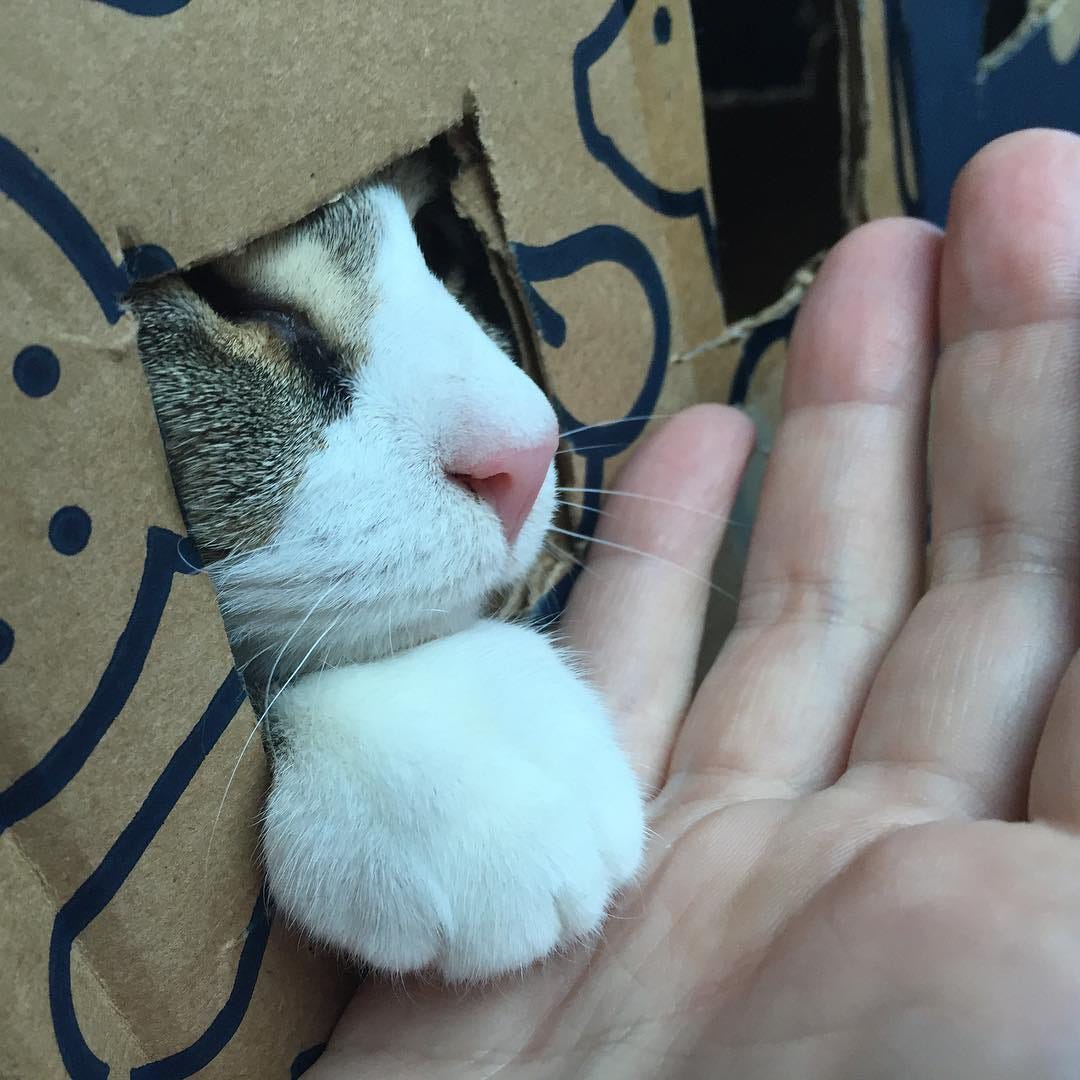
Stacy and I had planned to socialize the Bobbis and find homes for them, but then Socks got very, very sick with feline panleukopenia. Our regular vet helpfully told us it was a “deadly virus” and there was “nothing they could really do” — but the doctors at Manhattan’s Animal Medical Center told us to bring him in, that they could offer supportive care and hope that he could fight off the virus on his own. All of the Bobbis needed to stay at the hospital because it was unlikely that the virus hadn’t spread to all of them. We didn’t even have enough cat carriers at that point. They were brand new! So we had to cut holes in Blue Apron boxes and shuffle them off to the hospital that way.
Unfortunately, they were all still semi-feral, except for with me and Stacy, so they wouldn’t eat at the hospital. Their doctor called and told us their best hope was to come back home with us. They sent us on our way with intensive treatments for vomiting and fevers and pain and lethargy, and with crossed fingers.
“Sometimes medicine can only do so much,” the doctor told us. “Sometimes cats need someone they love to live for.”
In the back of the cab, Socks reached through the hole in his little cardboard box, and held my hand the whole way home.
They all lived.
Frodo Bobbi went to a new home with a mom and dad who met her when she lived on our back slab of concrete. She got a new name, Grey, and has lived like a princess every day since.
The other Bobbis stayed with us. They’d survived the summer streets of New York City and a virus our vet told us would kill them. They were ours.
Many years into Socks’ charmed cat life, he had a freak accident that injured his spine and left his bladder and back legs paralyzed. At that same Animal Medical Center, the doctor told us most people can’t handle a cat with an injury like that. “You want to have him euthanized?” she asked. Stacy and I barked, “NO!” at the same time, so they brought in a neurological specialist and a brilliant, compassionate team of vet techs who told us it was going to be a long, slow road. That Socks might never recover. But to give him the best chance, we’d needed to learn to manually express his bladder, keep him isolated on cage rest, and give him a zillion medications every few hours. They said it might take him a while to trust us again. He was furious at the doctors. They’d had to put him in a collar that said MAJOR CAUTION.
We set up a big cage in our bedroom, and moved him into it. When Stacy sat down in front of it the first time, he dragged himself to her with his front legs, right out the door, and into her lap. We learned to work together to manually get him to pee. Press down in the right place in his belly, grip the bladder which feels like a very slippery water balloon, assess how much urine is inside, squeeze until he’s emptied it, clean him up, clean up the rest of the room, do it again in eight hours. I don’t know how long we went without sleeping. It felt like a month.
A week in, Socks flicked the tip of his tail. The next day, his whole tail wagged back and forth. He got his left foot back, his right foot, his left leg, his right leg — and then, when I was on a Zoom call for work late one night, Stacy came running downstairs yelling, “HE’S PEEING ALL OVER THE PLACE! ALL OVER THE WALL! ALL BY HIMSELF!”


It was the best news I’d ever heard.
I thought I was going to lose my job during Socks’ injury. I was scheduled to leave for a work retreat that had, historically, been neither “work” nor “retreat” two days after he got hurt — but I knew that the only chance he had was for me to stay home and work with Stacy to nurse him through his most critical days. My decision was not met with grace, and soon after, a new rule appeared in the employee handbook that said bereavement leave could only be used for human death, not pet death. No one had a conversation with me about it, but I knew that change had been made specifically for me. It was an especially cruel addendum for a company that promised “unlimited paid time off.” Things were never the same with my job after that, but it didn’t matter to me. Socks learned to walk again, to jump again, to pee on his own without the yard-sprinkler mishaps. No job was worth more than his life.
And then, a few years later, he fell again. I woke up one night with a start, an awful, smothering feeling clawing at my chest. Something was wrong, but I didn’t know what. I went running downstairs and found him lying still in the middle of the kitchen. He looked up at me with that same dopey trust he’d had in his eyes when he was a kitten and walked right into that trap even after he’d seen me snatch up his siblings and take them away.


We went through the rehab process again. This time, I was a pro at expressing his bladder, and Stacy didn’t even need her falcon handling gloves. He’s never been able to jump again, but that’s okay. We just set up accessibility ramps all around the house — and when he needs to go upstairs or downstairs, he waits for someone to come over and pick him up and carry him to his destination.
It was a weird experience becoming personally disabled at the same time as my cat, mostly because it was hard for me to feel any real self-loathing when Socks’ limitations didn’t diminish my love for him in any way. Is it more work and stress to have a disabled cat? Yes, much more! But is it worth it in every way because he’s our Socks? Our little baby Bobbi? Yes, obviously! Disability has slowed him down, and it’s made him rely on us a lot more than before, but he’s still our goofy pink-nosed puppycat menace. We just want him here with us, no matter how much extra effort that takes. And he, of course, has never questioned his place in the center of our world.
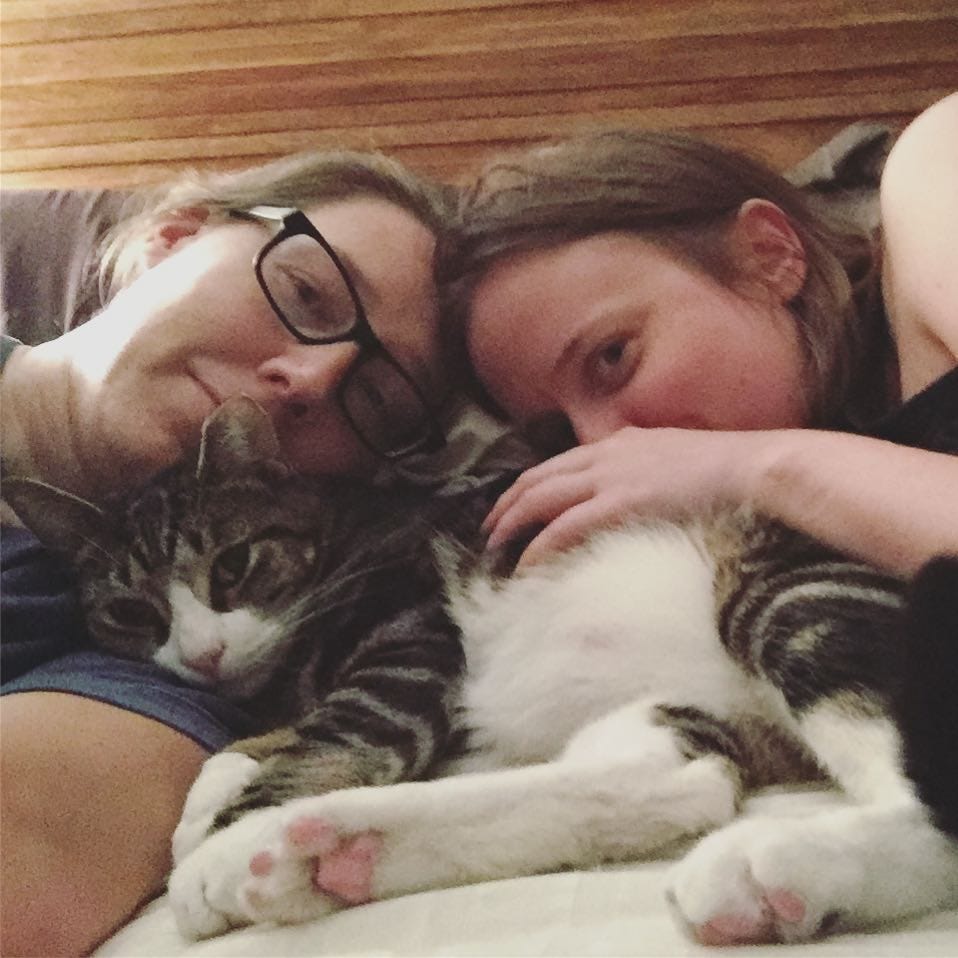
This past New Year’s Eve, after exams, and ultrasounds, and a full intestinal biopsy, we found out that Socks has small cell lymphoma. Tomorrow, he starts chemotherapy. It doesn’t seem fair, after everything he’s been through. It also doesn’t seem like he’s old enough to be considered “a senior cat,” but he really did show up on our doorstep eleven years ago. The vets tell us that even “senior cats” often do better with chemo than humans, that our helicopter parenting means we caught it very early, and that remission is a real possibility. He’s been on his first stage of treatment for the past six weeks, and even though I know he hates it, he waddles over to me every morning and sits patiently while I crunch up his pills and drop them into his mouth like he’s a baby bird, gently holding his snoot until he swallows them.
I don’t understand how Socks has always seemed to know that we love him and are going to do what’s best for him, even if it’s uncomfortable or scary. We say he has bumblebees in his noggin instead of brain cells, but in some ways, he’s the smartest living thing I’ve ever known. Maybe it’s in his DNA. Maybe he trusts us because his mom trusted us. Maybe something just clicked for him that day she deposited him at our door. Maybe he can sense our intentions. Maybe he remembers that cats were worshipped in ancient times, and he assumes we’re simply carrying on the tradition.
Just now, he reached out his paw and tapped my arm to let me know it’s time to stop typing and start petting. So I’ll do that. And would you do something for me? Hold him in your thoughts and heart? Send up a prayer for him? Light a candle maybe? I still only believe in cat magic, and he could use all the healing charms you can conjure right now.
If you’d like to support Socks during his chemotherapy journey, you can sign up for an new annual membership to my newsletter with a 20% discount. Just click here!
Cat magic! I definitely believe in cat magic. We got our current cats about a year ago, and two months in, when Rosie liked us but didn't really love us yet, and Sage was not at all sure we weren't serial cat killers, they got outside. Rosie didn't go far, and it only took us four days to trick her into going into the garage long enough to trap her in there, but Sage just vanished into thin air. 16 days later she showed up on the porch at 3am and two nights later we got her in the trap.
I have no idea where she went or how she found her way back but that was around 10 months ago and every day my adorable meowing skittish shadow follows me to the bathroom and back to my desk all day long I offer up a prayer of thanksgiving to the universe that she came back. I will send out more prayers to the universe for Socks.
Sending so much love to you and Stacy and Socks and the other Bobbis. One more miracle, Socks! You can do it!
Your story about the feral kittens made me laugh, because while I'd never socialized one from full feral status, my Mazie was a challenging case. She didn't start socializing to humans until she was five months old, and was incredibly standoffish when she came to me five months later. She was with her mom, who was clearly a housecat who was dumped, and I think Lilith trusting humans helped. But the first two weeks she was in the house, we had to do proof of life checks. Then she would come out where we could see her, but only if we were sitting quietly. She eventually approached to sniff us, but only when we were sitting on the toilet. Then she accepted pets, but again, only when we were on the toilet. Eventually she'd be near us and accept pets elsewhen, but she was still very self-contained.
Well, last summer she and her mom accidentally got out -- they pushed a window screen out trying to chase a bird. Lilith jumped right back in after doing the murder. Mazie got spooked and ran, and we didn't see her for a full week. It took us 19 days total to catch her, and she had broken off her femur head somewhere in there, so then she had surgery and confinement. We took turns sleeping in the guest room with her, because she yowled so sadly if we left her alone at night. She still hid in the cave we made her, but she came out to say hi and accept love. And suddenly, in the last two months, she has turned into a complete love bug. She sleeps on the bed with us, touching both of us, almost every night. When I come upstairs in the morning if I don't say hi to her she runs over and demands love. And she's taken to laying in my lap, which is a thing I never thought would happen with her. She jumps up on my desk and purrs and head butts my hand until I pet her sufficiently. She's a completely different cat. I was content to let her be her self-contained self, but I'm so grateful she's decided to let herself be loved.
I'll be thinking of Socks and all of you. Sending big cat love.